Road Safety Challenges and Solutions in Rural and Interurban Areas - A PIARC Briefing Note
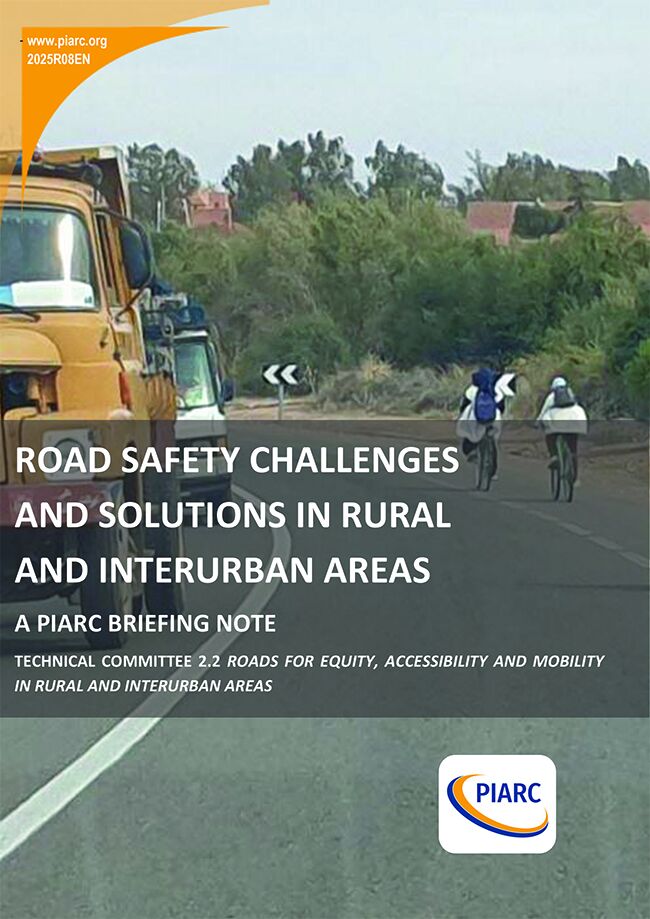
Road safety in rural and interurban areas is a significant global concern, disproportionately contributing to fatalities and serious injuries despite lower traffic volumes. Factors such as unsafe speeds, unforgiving road environments, impaired driving, limited seat belt usage, insufficient infrastructure for active modes, and delayed emergency response exacerbate safety risks. Addressing these issues requires target, cost-effective strategies which are suited to varying regional conditions and contexts.
This briefing note identifies critical risk factors and outlines evidence-based interventions which have been deployed across the world. Measures include infrastructure improvements such as clear zones, roadside barriers, enhanced signage, and dedicated pedestrian/cyclist paths. Behavioural interventions, such as stringent enforcement of seat belt usage and speed limits, alongside public awareness and educational campaigns are emphasized. Emerging technologies such as automated enforcement systems and real-time monitoring tools offer substantial promise for enhancing rural and interurban road safety.
To effectively reduce road fatalities and serious injuries, policymakers and transport authorities must adopt a comprehensive, safe system approach. This mindset integrates a design that induces the appropriate speed for the road environment, forgiving road design, rigorous enforcement, continuous maintenance, community involvement, and the deployment of advanced data-driven technologies.
Information sheet
- Date: 2025
- Author(s): Comité technique / Technical Committee / Comité Técnico 2024-2027 2.2 Routes pour l'équité, l'accessibilité et la mobilité dans les zones rurales et interurbaines / Roads for Equity, Accessibility and Mobility in Rural and Interurban Areas / Carreteras para la equidad, accesibilidad, y movilidad en zonas rurales e inter
- Domain(s): Urban Mobility
- Type: 2025R08EN - A PIARC Briefing Note
- PIARC Ref.: 2025R08EN
- Number of pages: 978